 |
|
|
MangeSarcoptic & Demodectic
The best way to tell if the condition is severe enough to warrant the assumption that it can be passed on to future generations is to wait and see if it clears up on its own. At least 80% of dogs will outgrow this condition. The dogs that do not get better and require treatment can usually be cured, or at least managed and controlled, in about 80% of cases. In older times, some 30 years ago, dipping dogs with demodectic mange in motor oil was a popular home remedy. Skin exposure to motor oil can cause rashes and skin destruction in severe cases. The hydrocarbons can be absorbed through the skin and cause a dangerous drop in blood pressure. If motor oil is licked off the coat, resultant vomiting can lead to aspiration of motor oil into the lungs and pneumonia. Kidney and liver damage can result from motor oil dipping. DO NOT DIP YOUR DOG IN MOTOR OIL! SOMETHING NEW TO TRY -- INTERCEPTOR® Interceptor (active ingredient: Milbemycin oxime) is normally marketed as a monthly heartworm preventive; when it is used on a daily basis, it is effective against generalized demodicosis. This discovery was welcomed by the veterinary profession as finally demodicosis could be treated without labor intensive dipping. The downside to this treatment is expense plus an owner can expect to be using this medication daily for up to 3 months to achieve cure.INTERCEPTOR MAY BE USED IN ANY PATIENT SAFELY. THE ONLY DOWNSIDE IS EXPENSE. SOMETHING ELSE NEW TO TRY -- IVERMECTIN
THIS MEDICATION IS NOT SAFE FOR USE IN COLLIES, SHETLAND SHEEPDOGS, AUSTRALIAN SHEPHERDS, OLD ENGLISH SHEEPDOGS, AND SOME WOULD SAY ANY HERDING BREED None of this information is guaranteed to be accurate -- always consult your veterinarian prior to making a decision on your pet's health. |
As an Amazon Associate we earn from qualifying purchases.
An absolute must have for any sporting dog owner. Save money on vet bills!
 |
|||
Beagles & Rabbit Hunting Videos - DVD - FREE shipping!
Rabbit Hunting Online is a participant in the Amazon Services LLC Associates Program, an affiliate advertising program designed to provide a means for sites to earn advertising fees by advertising and linking to Amazon.com |
 Sarcoptic
mange (scabies) is a highly contagious mange that does not require
any sort of immune suppression to infect dogs and can affect dogs of
any age. It is relatively easy to treat and most dogs can readily be
cleared of this mite infection.
Sarcoptic
mange (scabies) is a highly contagious mange that does not require
any sort of immune suppression to infect dogs and can affect dogs of
any age. It is relatively easy to treat and most dogs can readily be
cleared of this mite infection. Demodectic
mange (sometimes called "RED MANGE") is also contagious,
in that most dogs acquire the infection from their mother. The mite
usually lives in relative harmony with the dog and it is assumed that
most dogs have Demodex canis mites on their body. If the dog's immune
system is competent, the mites are suppressed and never achieve large
enough numbers to cause damage. Sometimes, local areas of the skin
are affected by hair loss (alopecia) and secondary bacterial infections
are common. When there are a number of spots, or the spots have spread
over large areas of the body and when these spots do not clear up without
treatment in four to eight weeks, the dog is said to have generalized
demodectic mange. Localized demodectic mange is thought to occur due
to transient stress or a decrease in local immune function at the affected
sites. Generalized demodectic mange is thought to be due to a specific
deficiency in T-cells that suppress these mites. This is thought to
be a hereditary condition but if the exact mechanism by which inheritance
occurs is known, it is not common knowledge.
Demodectic
mange (sometimes called "RED MANGE") is also contagious,
in that most dogs acquire the infection from their mother. The mite
usually lives in relative harmony with the dog and it is assumed that
most dogs have Demodex canis mites on their body. If the dog's immune
system is competent, the mites are suppressed and never achieve large
enough numbers to cause damage. Sometimes, local areas of the skin
are affected by hair loss (alopecia) and secondary bacterial infections
are common. When there are a number of spots, or the spots have spread
over large areas of the body and when these spots do not clear up without
treatment in four to eight weeks, the dog is said to have generalized
demodectic mange. Localized demodectic mange is thought to occur due
to transient stress or a decrease in local immune function at the affected
sites. Generalized demodectic mange is thought to be due to a specific
deficiency in T-cells that suppress these mites. This is thought to
be a hereditary condition but if the exact mechanism by which inheritance
occurs is known, it is not common knowledge.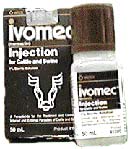 Ivermectin
is a broad spectrum anti-parasite medication generally used for food
animals and horses. It is licensed for use in dogs and cats as a heartworm
preventive only thus the use of this medication to treat demodicosis
is not approved by the FDA. When Ivermectin was a new drug it was hoped
that it could be used against demodectic mange mites. At first it was
found ineffective but later it was determined that daily doses are
needed (most other parasites can be controlled with wormings spaced
several weeks apart.) Ivermectin is inexpensive relative to Interceptor
and involves no labor intensive bathing. It DOES, however, taste terrible
if given orally (it may be necessary for the owner to give mixed with
juice or cola.)
Ivermectin
is a broad spectrum anti-parasite medication generally used for food
animals and horses. It is licensed for use in dogs and cats as a heartworm
preventive only thus the use of this medication to treat demodicosis
is not approved by the FDA. When Ivermectin was a new drug it was hoped
that it could be used against demodectic mange mites. At first it was
found ineffective but later it was determined that daily doses are
needed (most other parasites can be controlled with wormings spaced
several weeks apart.) Ivermectin is inexpensive relative to Interceptor
and involves no labor intensive bathing. It DOES, however, taste terrible
if given orally (it may be necessary for the owner to give mixed with
juice or cola.)

 Click for info.